
 English
 Français
 Italiano
 Deutsch
 繁體中文
繁體中文 中文
中文 Español
 日本語
日本語 한국어
한국어 Русский
 Português PT
 हिन्दी



Common Names
- Lilac
- Common lilac
- French lilac (trade name used for some cultivars)
- Tree lilac (for certain species, especially Syringa reticulata)
Scientific Name
Syringa spp. (most commonly Syringa vulgaris)
Family & Genus
- Family: Oleaceae (the olive family)
- Genus: Syringa
Description
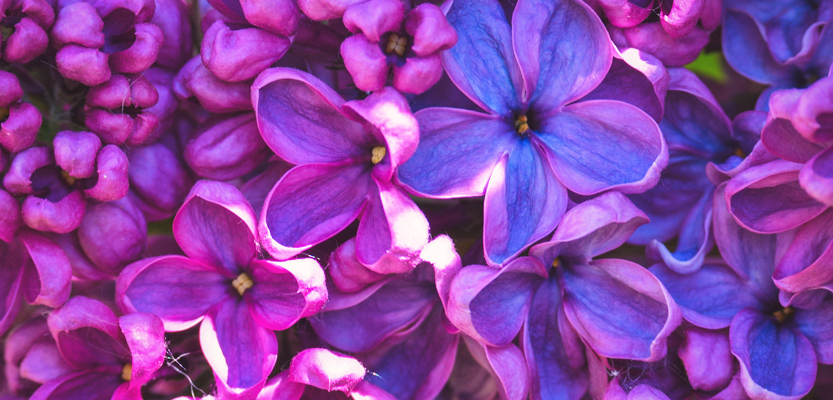
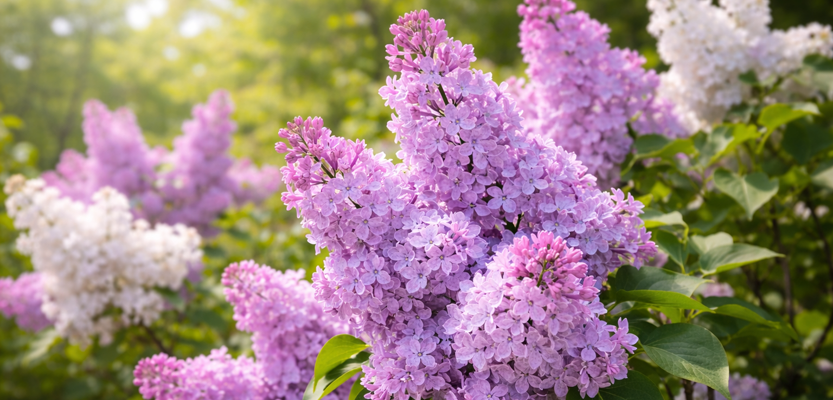
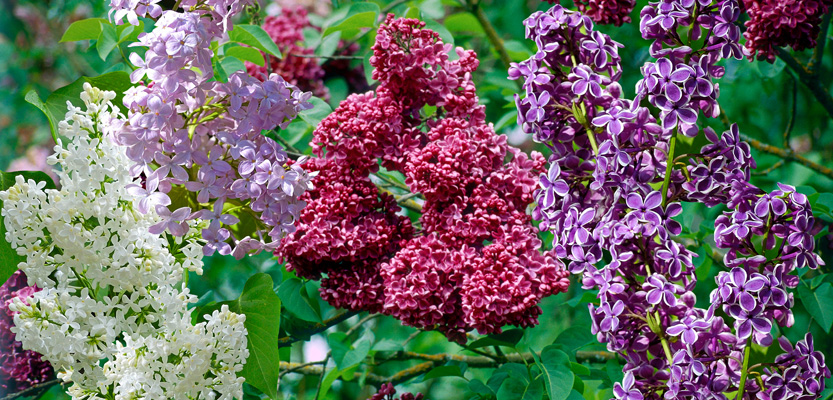
Lilac is a deciduous shrub (and sometimes a small tree) prized for its fragrant spring bloom and generous flower clusters. The blossoms form in cone-shaped or pyramidal panicles made of many small, four-lobed florets. Color ranges from soft lavender and classic purple to white, blush pink, deeper magenta, and cool-toned lilac-blue depending on the cultivar.
The leaves are typically heart-shaped to oval, smooth-edged, and medium to deep green, creating a clean backdrop that makes the blooms look even more luminous. In the garden, lilac can grow from about 1.5 to 6 meters depending on the species and variety, with an upright, branching structure that becomes more sculptural with age.
Habitat & Origin
The best-known garden lilac, Syringa vulgaris, originates from the Balkan region of southeastern Europe, while other Syringa species come from parts of East Asia. Lilacs prefer temperate climates with a true winter chill and perform best where springs are bright and summers are not relentlessly humid.
Symbolism & Meaning
- First love & early romance: often linked to the emotion of “first love,” especially purple lilacs.
- Innocence & fresh beginnings: commonly associated with white lilacs.
- Memory & nostalgia: their seasonal, short-lived peak bloom often evokes remembrance and cherished moments.
- Confidence with softness: the combination of bold fragrance and delicate florets suggests quiet strength.
Color Notes
- Purple / violet: first love, heartfelt emotion, admiration
- White: purity, sincerity, new chapters
- Pink: tenderness, affection, gentle joy
- Deeper magenta: passion, confidence, dramatic elegance
Uses
- Ornamental gardening: a classic shrub for borders, hedging, and spring focal points; excellent near patios and walkways where fragrance can be enjoyed.
- Cut flower: used for romantic, garden-style bouquets and spring centerpieces, especially when mixed with tulips, ranunculus, anemones, and airy greens.
- Perfume inspiration: lilac’s signature scent is widely recreated as a fragrance “accord,” because it is not typically produced as a simple, straightforward essential oil in the way many aromatic flowers are.
- Culinary styling (specialist use): some people use lilac blossoms as decorative accents or to infuse syrups; only do this when you are certain the flowers are pesticide-free and correctly identified.
Flower Care (Cut)
- Best cutting stage: harvest when roughly one-third to one-half of florets are open; tight buds may not open well after cutting.
- Prep: remove leaves that would sit below the waterline (lilac foliage can foul water quickly).
- Stem handling: lilac has woody stems; recut sharply and consider splitting the base 2–4 cm to increase water uptake.
- Conditioning: place in deep, clean, cool water and allow to hydrate in a cool spot for several hours before arranging.
- Maintenance: change water frequently, recut stems every 1–2 days, and keep away from heat and direct sun.
- Typical vase life: about 3–6 days, sometimes longer with excellent conditioning and cool storage.
Growing & Garden Care
- Light: full sun (best bloom and stronger stems), with light shade tolerated in hotter regions.
- Soil: well-drained, moderately fertile soil; avoid constantly wet ground.
- Pruning: prune right after flowering (lilac sets next year’s buds in summer). Remove spent clusters and thin older wood to keep airflow and flowering strong.
- Spacing: give room for air circulation to reduce powdery mildew pressure.
- Cold requirement: lilacs generally bloom best after a winter chill; in very warm climates, flowering can be weak or inconsistent.
Flowering Season
Lilacs are a hallmark of spring. Most varieties bloom from mid to late spring, with timing shifting earlier in warm regions and later in cooler climates. Some modern reblooming cultivars can produce a lighter second flush later in the season, but the main show remains the spring bloom.
Varieties & Notable Types
- Syringa vulgaris (Common lilac): classic fragrance and dense panicles; many historic and modern cultivars.
- ‘Sensation’: dramatic bicolor look (purple petals with a clean white edge).
- ‘Madame Lemoine’: refined double white blooms with a traditional, elegant feel.
- ‘Charles Joly’: richly colored double blooms, a favorite for bold spring arrangements.
- ‘Katherine Havemeyer’: double lavender flowers with strong perfume.
- Syringa patula ‘Miss Kim’: compact habit, late bloom, and excellent garden performance.
- Syringa meyeri ‘Palibin’: dwarf form ideal for containers and small spaces.
- Syringa reticulata (Japanese tree lilac): more tree-like shape and later, creamy blooms; useful where shrub lilacs struggle.
- Reblooming groups (e.g., “Bloomerang” types): bred for a main spring bloom with possible repeat flowering later.
Safety & Identification Notes
- Name confusion: “Lilac” in floristry usually means Syringa. Some unrelated plants are also called “lilac” (for example, “Persian lilac” can refer to a different tree), so confirm botanical identity when sourcing.
- Handling: generally handled as a standard ornamental cut flower; if using around food or pets, ensure correct identification and avoid chemically treated blooms.
Interesting Facts
- The genus name Syringa is linked to an ancient word meaning “tube” or “pipe,” referencing the plant’s straight, hollowable stems historically used for simple pipes and tools.
- Lilac’s scent is one of the most iconic “spring” aromas; it is often recreated in perfumery to capture its fresh, airy character.
- In garden design, lilac is valued not only for bloom, but for creating a fragrant “season marker” that signals the true arrival of spring.